
Common Mushroom Farming Mistakes That Reduce Your Profit
Mushroom farming is known to be very profitable in India. It has the added benefits of being a quick return business, needing very little space, and being a low budget business. Despite the profitability, most beginners and even a lot of experienced growers incur huge losses over mistakes that could have been avoided. Mushroom farming mistakes are very delicate things. Mistakes in this line of business can affect the yield of the mushrooms, quality of the mushrooms, whether the mushrooms can even be sold in the market, and ultimately the profitability of the business.
Knowing the common mistakes in mushroom farming, as well as the ways to mitigate these mistakes, is a good way to run a successful mushroom farm.
In this article, you will find the most common mistakes in mushroom farming that limit profitability, and ways to mitigate these mistakes to maximize the output and the profitability of the farm.
Why Mushroom Farming Mistakes is Critical to Avoiding
Once the mushroom farming business is started, it is very difficult to make a profit from it. This type of farming is very sensitive to the standards of hygiene and the conditions in the environment.
Even small hiccups in the:
- Hygiene
- Environment
Can all lead to a high degree of loss in a mushroom farming business.
These common mistakes in mushroom farming should be addressed as early as possible to increase the efficiency of the business.gf
using low-quality mushroom spawn.
Spawn is the foundational element used in mushroom cultivation. Low-quality spawn causes the following:
- Slow growth
- Uneven colonization
- Low yields
- More contamination
Signs of Poor Spawn
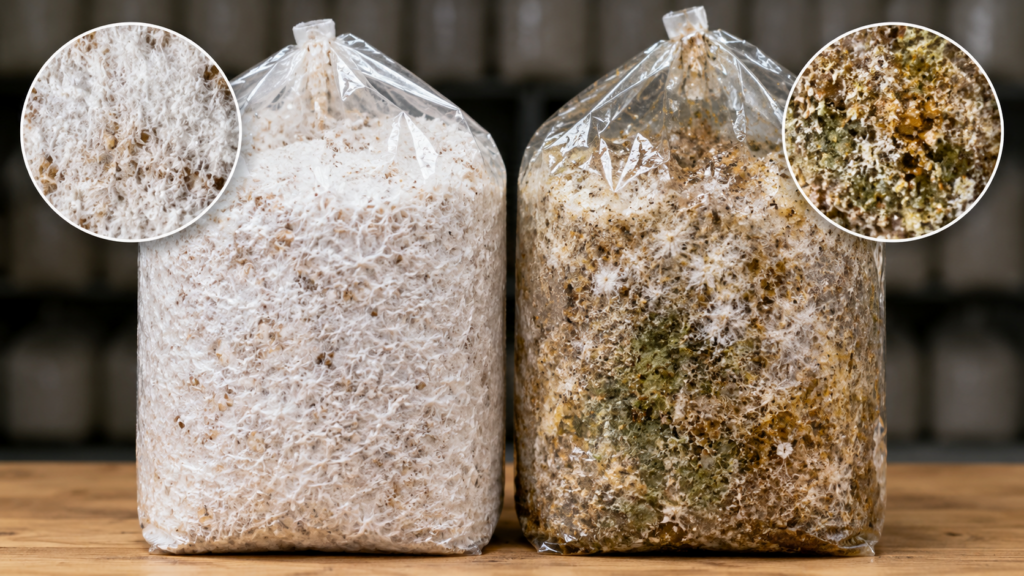
Spawn quality issues arise with what seems to be a lack of mycelium growth, an unpleasant smell, and array of discoloration and excess moisture.
Solution
The best way to avoid the spawn quality issues listed is to purchase quality spawn from a good supplier. Doing so may come with a slight cost increase but will greatly increase overall productivity.
improper straw preparation.
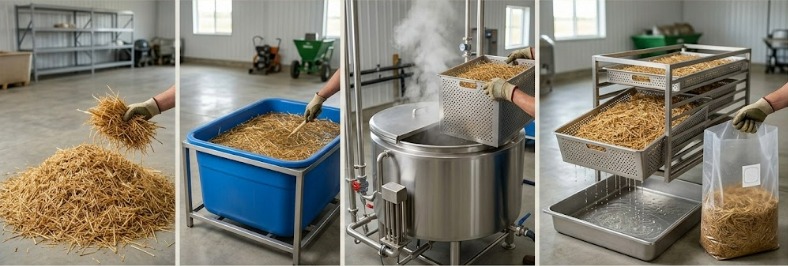
Straw is the primary growing medium used for cultivating oyster mushrooms. Starting mushroom growers often run into the following issues:
- Using untreated straw
- Improper pasteurization
- Leaving too much moisture
These create the optimal conditions for growth of unwanted microorganisms.
Solution
The best way to prepare straw properly for cultivation is to:
- Cut straw into small pieces
- Soak in clean water
- Pasteurize via hot water
- Remove excess moisture
Straw substrate preparation is extremely important for successful oyster mushroom cultivation.
Poor Hygiene Practices.
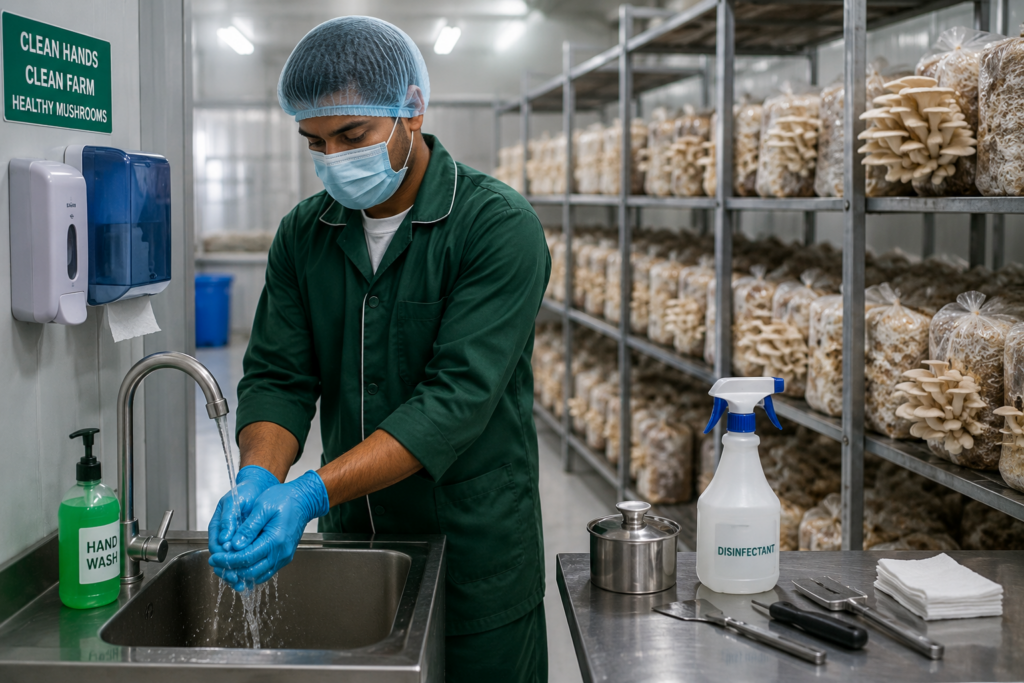
Poor hygiene is one of the most common causes for mushroom crop contamination so starting growers must avoid the following common mistakes:
- dirty growing rooms
- unwashed hands
- contaminated tools
- dust and debris collected
Contamination issues may result in a total loss of mushroom crops after just a few days.
Solution
The surest way to maintain mushroom crop hygiene is to:
- keep growing rooms clean
- clean all tools and equipment
- wash hands prior to touching the spawn
- keep injection of people into the crop area to a minimum
improper control of humidity.
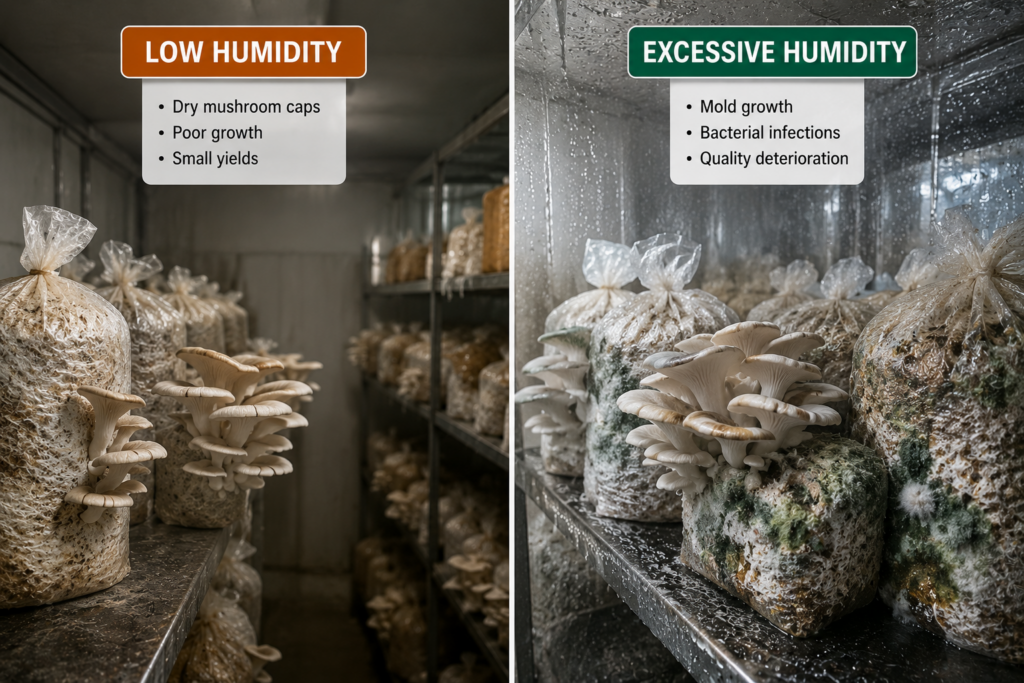
Humidity plays a crucial role in mushroom development.
Problems from Low Humidity
- Dry mushroom caps
- Poor growth
- small yields
Problems from High Humidity
- Mold growth
- Bacterial infections
- Quality deterioration
Ideal Humidity
- 80% – 90%
Solution
Frequent misting with good air circulation keeps humidity at a healthy balance.
Poor Ventilation
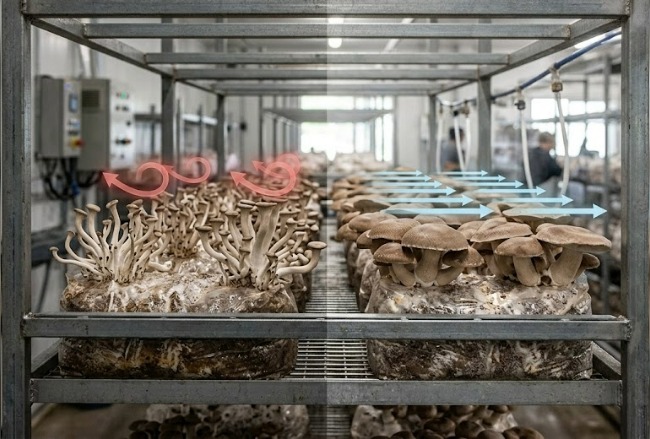
Farmers often overlook good air circulation that is balanced with moisture levels.
Without ventilation:
- CO2 builds up
- stems elongate
- caps stay small
Solution
Allow good air flow and humidity balance.
Crop quality will improve with the addition of simple exhaust fans and air circulation openings.
Temperature Changes
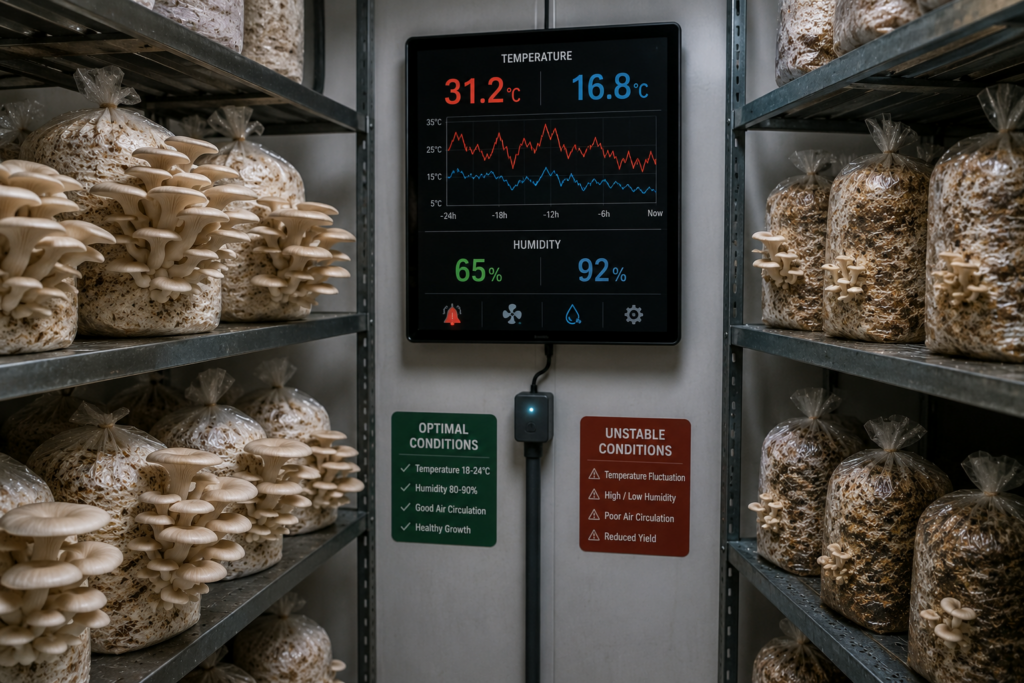
Growth of mushrooms is sensitive to changes in temperature.
Issues include:
- slow colonization
- lower yield
- mutations
- more contamination
Different varieties of mushrooms need different temperature ranges.
Oyster mushrooms need:
Ideal Temperature
- 20-30°C
Solution
Regular checkups of the growing room help to temperature control with either a cool or heated growing room.
Overwatering
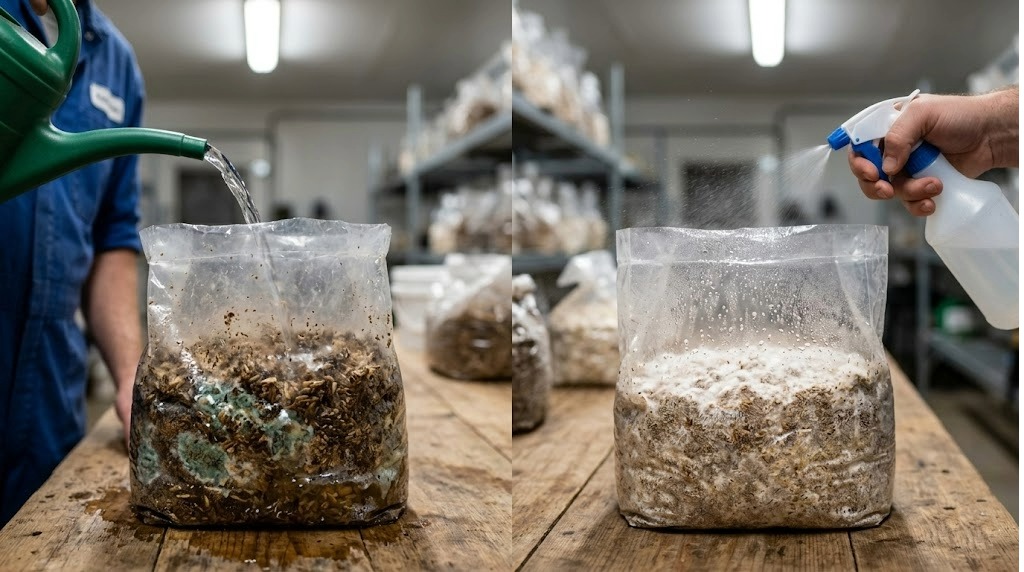
Poor growth is often associated with a lack of water.
The growth of mushrooms is stunted by:
- bacteria
- rot
- contamination
- poor quality
Solution
A light mist is better than soaking the growth medium. The goal is to keep humidity and not saturate the growth medium.
Waiting to Harvest
Harvesting at the right time is critical.
If harvest is delayed:
- caps open too much
- the shelf life gets shorter
- the quality decreases
- the value decreases
Solution
Mushrooms would be harvested when the caps are fully grown, and just before the edges start to curl. This point is the best balance for quality and quantity.
Lack of Market Planning
Some producers put effort into optimizing their production process, but oftentimes, this is at the neglect of the sales process. This leads to:
- unsold products
- dropping prices
- lowered revenue
The fix
Before mushroom cultivation begins, plan for the potential buyers. This could include:
- local vegetable markets
- restaurants
- hotels
- supermarkets
- consumers
A sales process should be in place at the same time as the production process.
Rapid Growth
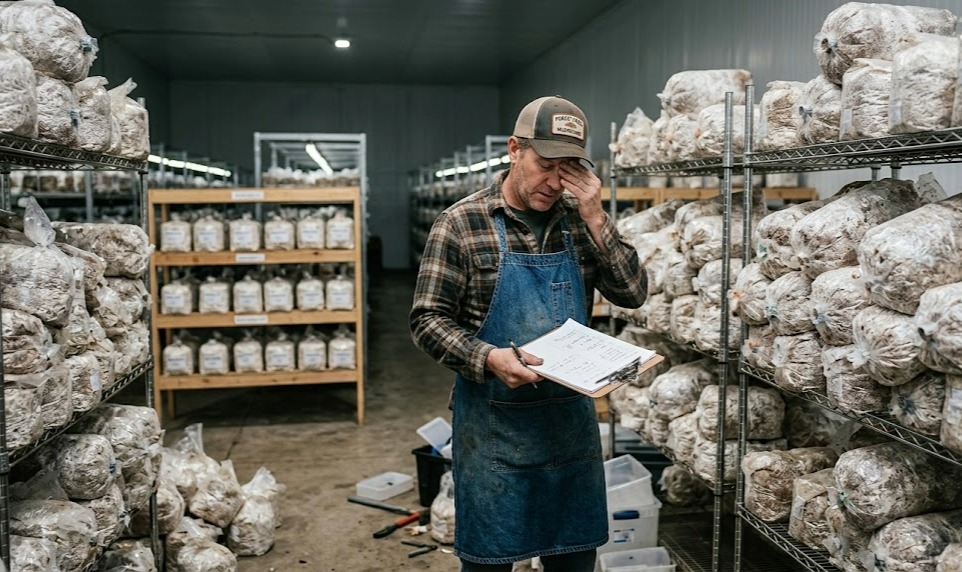
Fast, uncontrolled growth is one of the most common mistakes after some success in the industry. This leads to:
- inadequate management
- greater risk of contamination
- cash flow challenges
- difficulty in sales
The fix
Growth should be slow, deliberate, and controlled. Rapid growth in a mushroom farm should only occur when:
- yields are plentiful and consistent
- a customer base is established
- farm management is prioritized
Understanding Growth and Profitability in Mushroom Farming Mistakes
Contamination is one of the most costly issues for mushroom farmers. Understanding contamination and how to avoid it is important for optimizing profit.
Common contamination sources
Unsterilized substrate
Unsterilized, untreated, or low-quality substrate encourages the growth of mold and other contaminants.
Contaminated Spawn
Low-quality spawn can carry unwanted microorganisms.
Dirty farm
Dust will contain microorganisms and unwanted spores. It is important to maintain a clean farm.
Moisture
Overwatering can lead to a number of microbial diseases.
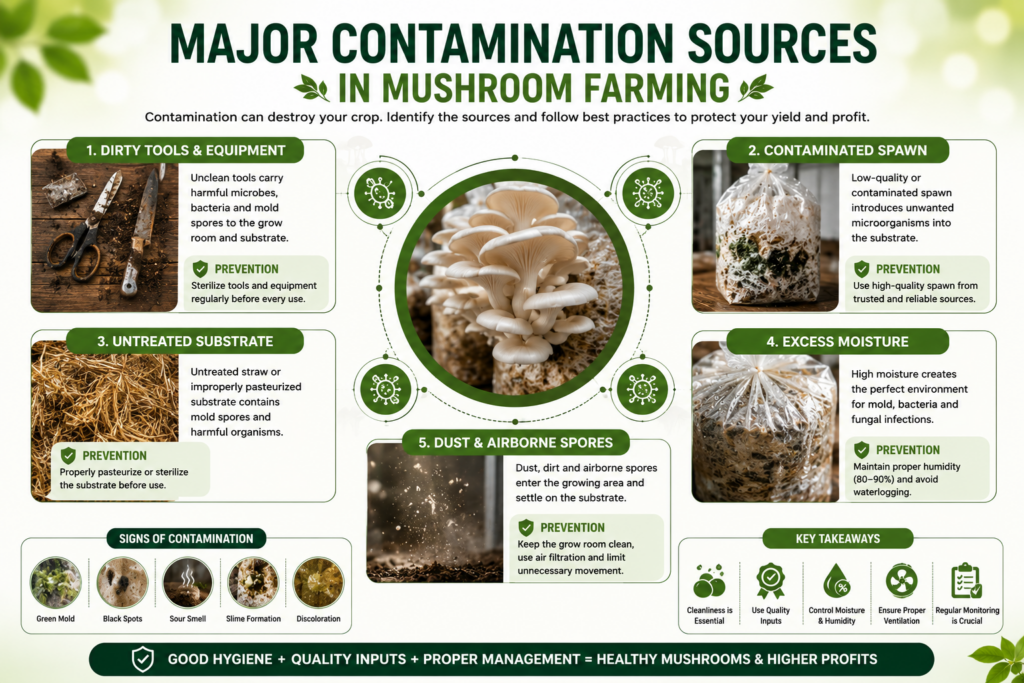
Signs of contamination
It is important to routinely check the spawn bags:
Warning Signs
- Green mold
- Black spots
- Sour smell
- Slime formation
- Abnormal discoloration
Early detection helps reduce losses.
How to keep better yields
Avoiding mistakes is only part of the equation.
Successful growers also focus on maximizing yield.
Focus on the right quality inputs
Raw materials like substrate and/or spawn should be of high quality.
Strong, consistent conditions can optimize growth
Regularly check the growing crops for any potential issues.
Implement Appropriate Cultivation Practices
An integrated set of standard operating procedures is important for best practice cultivation, as they help to standardize and reduce errors.
Key tips for those starting mushroom farming
Here are some tips for novice mushroom farmers:
Begin with a Modest Farm
It’s important to first understand the cultivation practice before expanding the business.
Use Oyster Mushrooms
They are inexpensive and easy to grow.
Maintain Records
Record:
- Expenses
- Revenue
- Crop Yield
- Weather
Keep participating in workshops Be a Life-long Learner and cultivate relationships with more experienced farmers.
Financial Consequences of Poor Practices
Many farmers do not understand the financial impacts of poor practices.
Imagine a very small farm growing 100 bags of mushrooms.
A 20% loss in yield means that a very big portion of the farm would be unprofitable.
Many benefits of poor practice elimination include, but are not limited to:
- More output
- Increased quality
- Decreased waste and loss
- Happier customers
- Profit maximization
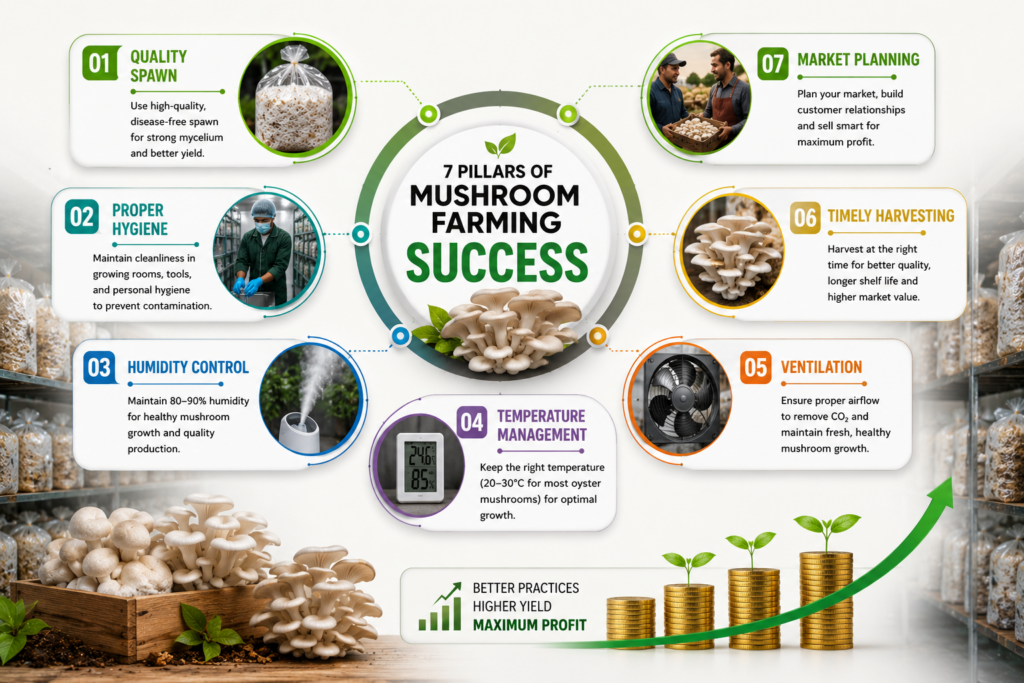
The Pillars of Mushroom Farm Success
The three pillars of a mushroom farm are:
Consistent Quality
The quality of mushrooms is based on the consistency of the practice.
Reliability and Demand of the Farm
Mushroom farms are often the best customers
Farmers Passion for Operations
The best farmers practice and analyze their operations.
The cumulative impact of all these practices will result in the best outcome for farmers.
Conclusion
Mushroom Farming incorporates industrial farming to a small scale. Entrepreneurs have superb models for profit, but have to understand preventable practices. Hygiene, spawn quality, humidification and planning are just some of the many impacts on profit.
These practices, once understood, will allow farmers a profitable mushroom enterprise.
Whether you are cultivating mushrooms at home or running a business, avoiding these mistakes will greatly improve your chances of being successful in the long term.
Frequently Asked Questions
What is the biggest mistake in mushroom farming?
Lack of hygiene and high levels of contamination are common and cause many crops to fail.
How can contamination be prevented?
Good hygiene, quality spawn, preparing substrate accurately, and controlling humidity levels.
Why is humidity important in mushroom cultivation?
Humidity affects the growth and quality of mushrooms as well as the overall yield.
Can low-quality spawn affect production?
Yes, low quality spawn can lead to slow growth and low yield with high contamination levels.
How can beginners improve the chances of mushroom farming success?
Start small scale, keep hygiene, assess the environment, and follow the guidelines of cultivation.