
How to Grow Spirulina at Home: Complete Beginner's Guide
Home spirulina cultivation is becoming more popular as interest grows around healthy living, sustainable food production, and self-sufficiency. Spirulina at home is packed with nutrients and is commonly found in health supplements.
The good news is that Spirulina can be grown at home with a few pieces of equipment and proper management. Whether you want to learn the cultivation process for food for you and your family or for a small business, the process is relatively simple.
This guide for beginners contains numerous pieces of information about growing Spirulina at home. Learn about tanks, the best growing conditions, harvesting, how to care for your Spirulina, and what mistakes to avoid.
What is Spirulina?
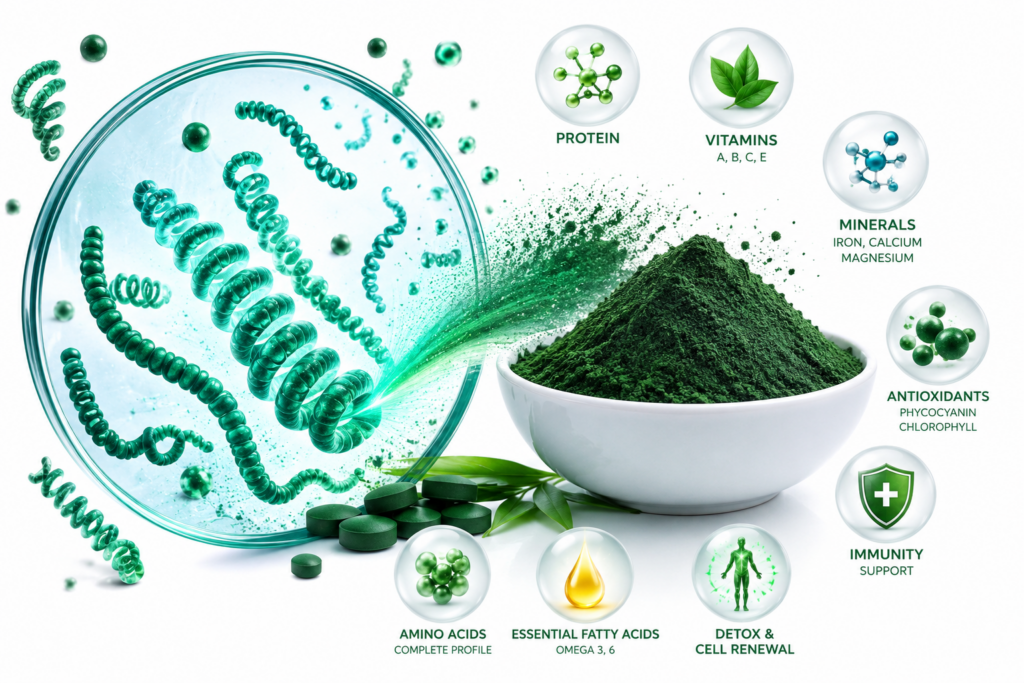
Spirulina is a blue-green water algae. Because it naturally grows in a saltwater, alkaline habitat, it is safe to eat. Along with centuries of consumption, it is also known as a superfood for its nutrient density.
Spirulina’s Nutritional Impact
Spirulina packs in:
- Protein
- Iron
- Calcium
- Magnesium
- Potassium
- Antioxidants
- Chlorophyll
- Amino Acids
It’s important to appreciate all the nutrients in Spirulina. Because of its nutrients, Spirulina has attracted significant attention from:
- Fitness Fans
- Vegetarians/Vegans
- Health Food Consumers
- Athletes
- Health Professionals
What are the Advantages of Cultivating Spirulina at Home?
There are many advantages to cultivating Spirulina at home.
Produces Fresh and Safe Spirulina
You control the entire cultivation process.
Grows in a Limited Area
Spirulina can be grown on:
- Balconies
- Roofs
- Backyards
- Greenhouses
- Indoor growing areas
More Economical
Producing your own spirulina reduces the need to purchase commercial supplements.
Learning Opportunity
Cultivating Spirulina can teach you how to grow sustainable food and cultivate microalgae.
Critical Factors for Spirulina Growth
Before building a system to cultivate Spirulina, you should know what conditions are best to help it grow.
What are the Temperature Requirements?
Spirulina grows best in a:
Warm Climate
between 30°C and 38°C
What are the Light Requirements?
Spirulina needs light to grow.
The best kind of light is:
- Bright with some shade
- Bright with some shade if really hot
What Water is Best for Spirulina at home Cultivation?
Water must be clean.
Avoid:
- Chlorinated Water
- Contaminated Water
- Polluted Water
What are the Spirulina Growth Conditions?
Spirulina prefers to thrive in an alkaline environment.
It’s best to keep the pH in a certain range to prevent contamination and support healthy growth.
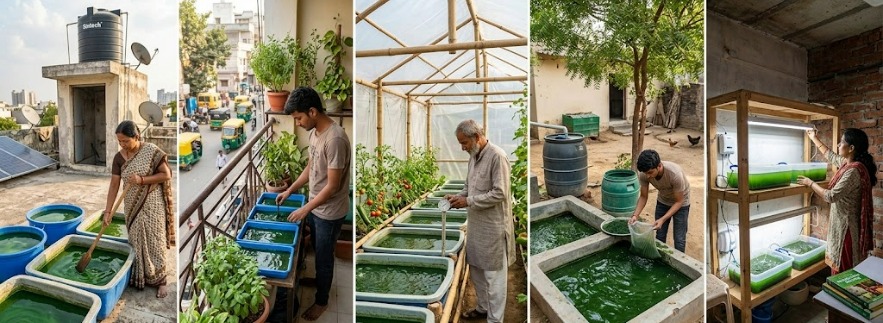
Spirulina Cultivation Tank
The biggest and most important component of your home Spirulina cultivation system is the growing tank.
What to Use as a Spirulina Cultivation Tank
If you are new to this, you can use:
- Plastic Tubs
- Cement Tanks
- Fiberglass Tanks
- Tanks lined with HDPE
For home cultivation, shallow tanks are the best option.
Recommended Tank Depth
20 to 30 centimeters
Shallower tanks allow:
- Better penetration of sunlight
- Better oxygen exchange
- Easier harvesting
Tank Location
Select a site that has:
- Sufficient sunlight
- Adequate air flow
- Shelter from heavy rain
Often, rooftops and open terraces are the best locations.
Materials Needed for Spirulina Cultivation
Before you begin, gather these materials.
At a minimum, you will need:
- A cultivation tank
- Clean water
- Spirulina starter culture
- A nutrient medium
- A stirring tool
- Fine filter cloth
- Collection containers
A quality starter culture is essential for successful cultivation.
Step-By-Step Guide for Cultivating Spirulina
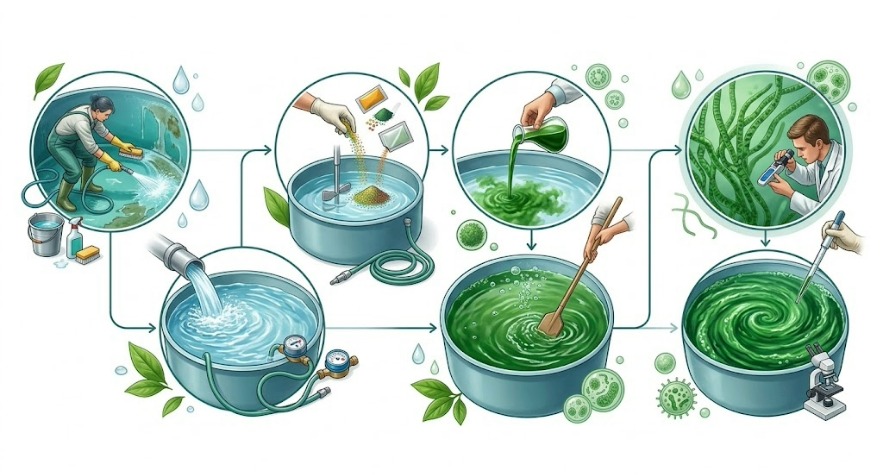
This portion of the document outlines the cultivation procedures.
Step 1: Prepare the Tank
You need to make sure the tank is clean before use. Dust, dirt, and chemical remains need to be removed.
A clean tank helps eliminate the risk of contamination.
Step 2: Fill with Water
Pour clean water into the cultivation tank.
Make sure the water supports algal growth.
Step 3: Prepare the Nutrient Medium
Spirulina needs a nutrient medium for growth, and the cultivation medium is that for Spirulina.
The healthy growth of Spirulina is dependent on the formulation of the nutrients provided and can be guided by some of the various Spirulina cultivation guides.
Step 4: Add the Starter Culture
The prepared tank can now be added with the spirulina culture.
This will serve as the inoculum to be cultivated.
Step 5: Mix Daily
The culture should be mixed daily.
This helps with:
- Distribution of nutrients
- Sunlight exposure
- Oxygen availability
Step 6: Grow Monitoring
The culture should be observed on a daily basis.
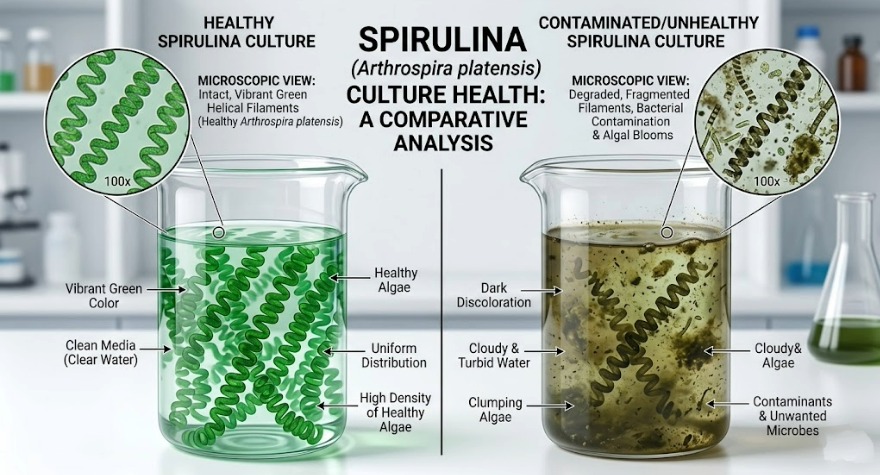
Indicators of Healthy Spirulina
A healthy spirulina culture looks:
- Bright green with consistent coloration
- Lacks foul smells
Identifying these indicators regularly can help spot problems.
How Fast Does Spirulina Grow?
Growth rate is affected by:
- Temperature
- Sunlight
- Nutrients
- Quality of Culture
Spirulina can quickly reach a desirable concentration for harvesting when conditions are right.
Consistent management is the secret to success.
Spirulina Harvesting Process
When the culture reaches sufficient density, the harvesting process can begin.
Step 1: Filter the Culture
To separate the water from the spirulina biomass, a fine cloth or filter is used.
Step 2: Collect Biomass
The filtered Spirulina is carefully collected.
Step 3: Wash the Spirulina
Cleaning water is used to wash the Spirulina to remove the rest of the cultivation medium.
Step 4: Drain Excess Water
Spirulina is dried to remove the rest of the water.
How is Spirulina Dryed?
Drying Spirulina is important for preserving quality.
Drying naturally:
- Can be done with controlled drying.
- Provides better quality and a longer storage life.
Don’t use a lot of heat – it can lower the nutrition value.
Storing Spirulina
To keep Spirulina quality high, it needs to be:
- Stored in airtight containers
- Kept cool and dry
- Kept away from the sun
To keep the nutrients and freshness high, proper storage is important.
Spirulina Cultivating Mistakes
New cultivators make the same mistakes that are easy to avoid.
Starting Cultures are Poor Quality
Weak cultures cause lower yields.
Not Mixing Enough
Growth is affected by inadequate circulation.
Poor Water Quality
Damages the water and affects production.
pH is Not Managed Correctly
Spirulina needs alkaline water.
Need for Monitoring
Ignoring signs of trouble leads to problems.
Effective daily monitoring helps minimize potential impact.
Better Production Tips
To get better output:
Start with a Good Quality Starter Culture
Better starter cultures yield stronger growth.
Keep Conditions Static
Stable temperatures and sunlight make the process more productive.
Use Clean Equipment
Clean systems = less contamination.
Harvest More
More frequent harvesting leads to better growth.
Monitor to Track
Keep records on:
- Rate of growth
- Amount harvested
- Conditions
This information can help with future production.
Can Spirulina Be Grown All Year Indoors?
Absolutely.
Indoors is a great way to grow when you can keep the lighting and temperature up.
Some great benefits of going with an indoor system are:
- Environmental Control
- Less Contamination
- All Year Long
Although you can grow all year long, lighting can be expensive, along with maintenance.
Home Spirulina System Cost
The cost of a small home spirulina system is based on:
- Size of the tank
- Quality of Equipment
- Quality of Culture
- Quality of Nutrients
Many home systems cost much less than most farm systems.
If the home system is working and you want more, you can easily go bigger.
Is Growing Spirulina at Home a Profitable Venture?
Most home systems are designed for personal consumption.
Once the grower is comfortable, they may want to sell to:
- Neighbors
- Health food stores
- Websites
- Supplements
Spirulina products continue to be a great home business and growing product.
Advantages of Spirulina Production
Using a small home system can grow food that is highly nutritious and can be grown with little impact on nature, compared to most farming.
Personal Health Benefits
You can have access to fresh Spirulina.
Potential Income Opportunity
Over time, this can turn into a small business.
The Future of Spirulina Cultivation at home
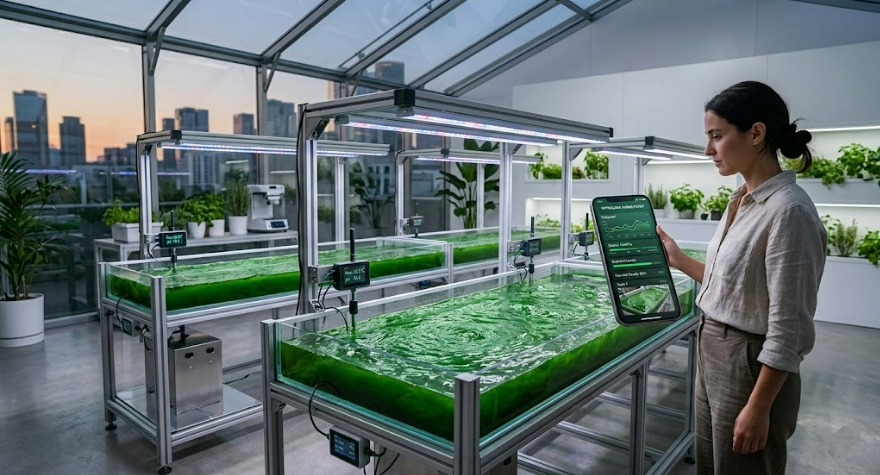
In the future, home spirulina cultivation will most likely become increasingly more common as urban farming, self-sufficiency, and a focus on holistic nutrition become more popular.
Cultivation technology is improving, as well as the general public’s understanding and awareness of the industry. This creates more prospects for small-scale producers.
Spirulina is a great cultivation option for people who are into health, sustainability, and having a business.
Conclusion
Cultivation of Spirulina at home is an excellent option for practicing sustainability and for producing ultra-nutrient-dense food for personal consumption. Spirulina can be cultivated in a variety of locations, even small ones, by beginners with the right system, a good starter culture, and periodic care.
For personal, familial, or commercial reasons, the practice of spirulina cultivation is a great option that is both rewarding and beneficial to the environment. This guide provides the information necessary for beginning your spirulina cultivation and gaining experience in this new and rapidly growing area of modern agriculture.
Frequently Asked Questions
Can Spirulina be grown at home?
Yes, home cultivation of Spirulina is possible with simple systems coupled with the right nutrients and with the proper cultivation environment.
What is the ideal temperature for growing Spirulina?
Spirulina prefers a temperature range of 30°C to 38°C.
How much room do you need to grow Spirulina?
Home production can be accomplished with a small tank that can be located on a rooftop, balcony, or in the backyard.
How is Spirulina collected after cultivation?
Cultured Spirulina is collected by filtering, washing, and drying the biomass.
Is it possible for beginners to farm Spirulina?
Yes. After a short period of training and with proper management, even beginners are able to farm Spirulina successfully, and with time and experience, the farming itself can also be scaled.