Natural Farming vs Organic Farming: Which is Better for Indian Farmers?
Indian agriculture is undergoing a major transformation. Rising fertilizer prices, declining soil fertility, unpredictable weather patterns, and increasing consumer demand for chemical-free food have encouraged farmers to look beyond conventional farming methods. Among the most popular alternatives are Natural Farming and Organic Farming. While both aim to reduce chemical dependency and promote sustainable agriculture, they differ significantly in terms of cultivation practices, investment requirements, certification processes, and profitability. Many farmers often wonder: “Natural Farming vs Organic Farming – which is better?“
The answer depends on your farm size, budget, available resources, market access, and long-term farming goals.
In this comprehensive guide, we will compare Natural Farming vs Organic Farming in detail, and will explain their benefits and challenges, and help you decide which approach is best suited to your farming journey.
What is Natural Farming?
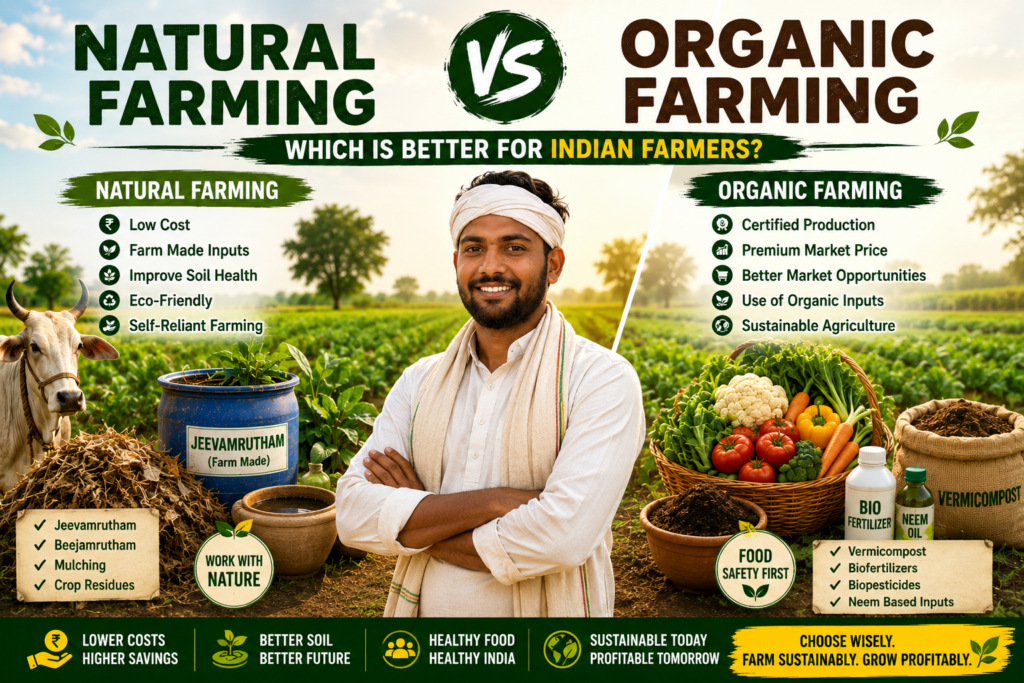
Natural Farming is an agricultural system that relies on nature’s own processes to grow crops. Instead of using synthetic fertilizers, pesticides, or costly commercial products, farmers use locally available resources such as cow dung, cow urine, crop residues, and biological formulations.
The primary objective of natural farming is to create a self-sustaining ecosystem where soil organisms, plants, animals, and farmers work together in harmony.
Core Principles of Natural Farming
- Minimal disturbance of soil
- Use of farm-made biological inputs
- Promotion of biodiversity
- Water conservation
- Reduced dependence on external resources
- Soil regeneration through microbial activity
Common Inputs Used in Natural Farming
- Jeevamrutham
- Beejamrutham
- Cow dung
- Cow urine
- Mulching
- Crop residues
- Green manure
What is Organic Farming?
Organic Farming is a scientifically regulated farming system that avoids synthetic chemicals and genetically modified organisms (GMOs). Instead, it depends on approved organic fertilizers, composts, biofertilizers, and biological pest-control methods.
Unlike natural farming, organic farming is often requires farmers to purchase inputs from external suppliers and follow certification standards if they want to market their products as certified organics.
Common Inputs Used in Organic Farming
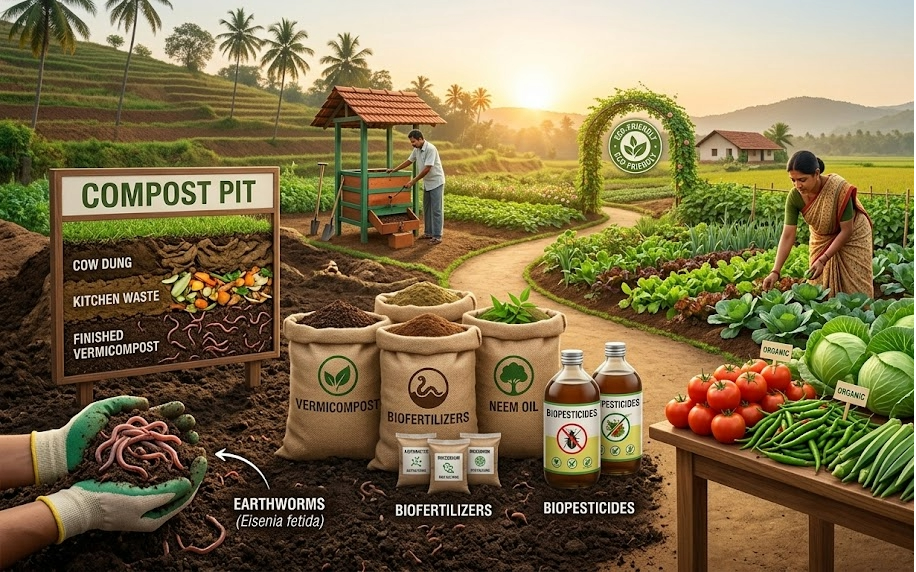
- Vermicompost
- Farmyard manure
- Organic fertilizers
- Biofertilizers
- Biopesticides
- Neem-based products
- Organic growth enhancers
Organic farming is widely adopted by farmers targeting premium domestic and export markets.
Natural Farming vs Organic Farming: Key Differences
| Factor | Natural Farming | Organic Farming |
|---|---|---|
| External Inputs | Very Low | Moderate |
| Purchased Inputs | Minimal | Often Required |
| Certification | Not Usually Required | Usually Required |
| Production Cost | Low | Medium to High |
| Soil Disturbance | Minimal | Moderate |
| Market Premium | Limited | Higher Potential |
| Dependence on Suppliers | Very Low | Moderate |
| Farming Philosophy | Work with Nature | Replace Chemicals with Organic Inputs |
Although both systems promote sustainability, their implementation and economics can be very different.
Popular Natural Farming Techniques in India
Jeevamrutham
Jeevamrutham is a microbial culture prepared using cow dung, cow urine, jaggery, pulse flour, and soil. It increases beneficial microbial activity and improves nutrient availability.
Beejamrutham
This natural seed treatment protects seeds from fungal diseases and improves germination rates.
Mulching
Covering the soil with crop residues helps retain moisture, suppress weeds, and improve soil fertility.
Mixed Cropping
Growing multiple crops together improves biodiversity, reduces pest attacks, and minimizes risk.
Whapasa
Whapasa focuses on maintaining adequate soil aeration and moisture balance rather than excessive irrigation.
Major Organic Farming Practices
Compost Application
Decomposed organic matter improves soil structure and nutrient content.
Vermicomposting
Earthworms convert organic waste into nutrient-rich compost that enhances soil fertility.
Crop Rotation
Different crops are grown in sequence to prevent nutrient depletion and reduce pest pressure.
Green Manuring
Certain crops are grown specifically to improve soil fertility when incorporated into the soil.
Biofertilizers and Biopesticides
Beneficial microorganisms and natural pest-control solutions support healthy crop growth.
Which Farming Method Has Lower Costs?
For most Indian farmers, reducing cultivation costs is just as important as increasing yield.
Natural Farming Costs
Natural farming relies largely on resources already available on the farm.
Typical expenses include:
- Seeds
- Irrigation
- Labor
- Preparation of biological formulations
Since farmers prepare most inputs themselves, recurring expenses remain relatively low.
Organic Farming Costs
Organic farming often requires:
- Organic fertilizers
- Vermicompost
- Biofertilizers
- Organic pesticides
- Certification fees
- Documentation expenses
As a result, operational costs are generally higher than natural farming.
Winner: Natural Farming
When cost reduction is the primary objective, natural farming offers a significant advantage.
Which Farming Method Is More Profitable?
Profitability depends on both income and expenditure.
Natural Farming Profitability
Benefits include:
- Lower cultivation costs
- Reduced dependence on external inputs
- Improved soil fertility over time
- Better resilience during market fluctuations
Challenges include:
- Limited premium pricing opportunities
- Lower awareness among consumers
Organic Farming Profitability
Benefits include:
- Premium market access
- Higher selling prices
- Export opportunities
- Strong brand value
Challenges include:
- Certification costs
- Higher investment requirements
- Greater documentation
Real-World Perspective
Imagine two vegetable farmers cultivating one acre each.
Farmer A adopts natural farming and spends significantly less on fertilizers and pesticides.
Farmer B follows certified organic farming and spends more on inputs and certification but sells produce at a premium price.
Depending on local markets, either farmer may earn more revenue, but natural farming often delivers stronger net margins because of lower expenses.
Advantages of Natural Farming
Natural farming offers numerous benefits that make it attractive to Indian farmers.
Lower Investment
Most inputs are prepared using farm resources.
Improved Soil Fertility
Beneficial microorganisms flourish, enhancing nutrient cycling.
Water Conservation
Mulching and biological activity improve water retention.
Environmental Sustainability
Reduced chemical usage minimizes pollution and protects biodiversity.
Better Long-Term Soil Health
Continuous application of biological formulations improves soil structure naturally.
Farmer Self-Reliance
Farmers become less dependent on expensive external suppliers.
Disadvantages of Organic Farming
Although organic farming offers strong market potential, farmers should understand its limitations.
Higher Input Costs
Organic fertilizers and pest-control products can be expensive.
Certification Expenses
Certification requires time, money, and proper documentation.
Transition Challenges
Farmers converting from conventional farming may experience temporary yield reductions.
Market Dependency
Profitability often depends on access to premium organic buyers.
Which Method Is Better for Small Farmers?
For small and marginal farmers, natural farming often proves more practical because:
- Initial investment is lower
- Financial risk is reduced
- Local resources can be utilized efficiently
- Dependence on market-purchased inputs decreases
This is one reason why natural farming has gained popularity across many rural regions of India.
Can Natural Farming and Organic Farming Be Combined?
Yes.
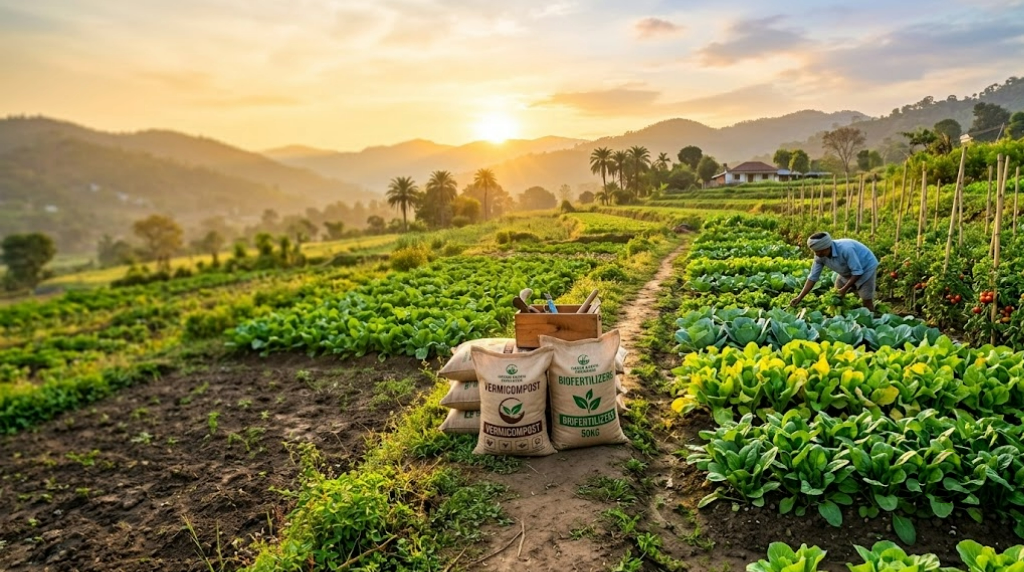
Many successful farmers adopt a hybrid approach by combining the strengths of both systems.
Examples include:
- Using Jeevamrutham and Beejamrutham
- Applying vermicompost
- Practicing crop rotation
- Maintaining biodiversity
- Reducing chemical dependence
This balanced strategy often helps farmers improve sustainability while maintaining productivity.
Future of Sustainable Farming in India
Consumer demand for chemical-free food continues to rise.
The fastest-growing categories include:
- Naturally grown vegetables
- Organic fruits
- Chemical-free grains
- Sustainable dairy products
- Health-focused food products
Government support, increasing environmental awareness, and changing consumer preferences are creating new opportunities for farmers adopting sustainable agricultural practices.
Both Natural Farming and Organic Farming are expected to play a vital role in the future of Indian agriculture.
Final Verdict: Natural Farming vs Organic Farming
Choose Natural Farming if:
- You want low-cost cultivation
- You have limited capital
- You prefer self-reliant agriculture
- You want to reduce dependence on external inputs
Choose Organic Farming if:
- You can invest in certification
- You have access to premium markets
- You plan to export produce
- You want stronger product branding
For most small and medium-scale Indian farmers, natural farming provides a practical, affordable, and sustainable pathway toward long-term profitability.
Conclusion
The debate between Natural Farming and Organic Farming is not about finding a universal winner. Instead, it is about choosing the system that best aligns with your farm resources, financial capacity, and market opportunities.
Natural farming focuses on self-reliance, cost reduction, and ecological balance, while organic farming emphasizes certified production and premium market access.
By understanding the strengths and limitations of both methods, farmers can make informed decisions that improve profitability, soil health, and environmental sustainability.
Frequently Asked Questions
What is the main difference between natural farming vs organic farming?
Natural farming relies mainly on farm-made inputs and natural biological processes, while organic farming allows approved organic inputs and often requires certification.
Is natural farming cheaper than organic farming?
Yes. Natural farming generally involves lower cultivation costs because most inputs are prepared using locally available farm resources.
Which farming method is more profitable?
Profitability depends on production costs, certification expenses, and market access. Organic farming may offer higher selling prices, while natural farming often delivers better net profit margins.
Does organic farming require certification?
Certification is usually required if farmers wish to sell produce as certified organic and access premium markets.
Is natural farming suitable for vegetable cultivation?
Yes. Many Indian farmers successfully cultivate vegetables using natural farming methods while reducing input costs and improving soil health.
Can natural farming and organic farming be combined?
Yes. Many farmers combine natural farming principles with organic practices such as composting and crop rotation to improve sustainability and productivity.
Which farming method is best for beginners?
Natural farming is often considered easier for beginners because it requires lower investment and fewer purchased inputs.