
Mushroom Farming Business in India- Cost and Profit Guide
The fastest developing area in agribusiness in India is mushroom farming. The healthy food and vegetarian protein product trends alongside the demand for value-added agricultural processing make mushroom farming business is a profitable agribusiness opportunity.
Mushroom cultivation uses substantially less land than traditional farming and can be done year-round with controlled environmental systems. This means that mushroom farming is a great business opportunity for small landholders, young people from rural areas, women, and any other people who want to start a successful farming business.
This guide covers all aspects of starting a mushroom farming business in India. It covers infrastructure, how to grow mushrooms, how much it costs to start mushroom farming, how to calculate profits, and how to find customers.
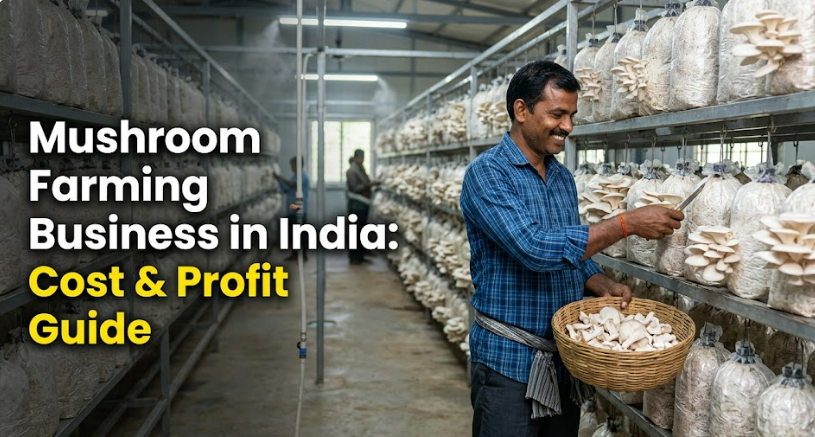
Reasons to Start a Mushroom Farming Business
Mushrooms are nutritious, and people have become more health-conscious and more conscious of what they eat.
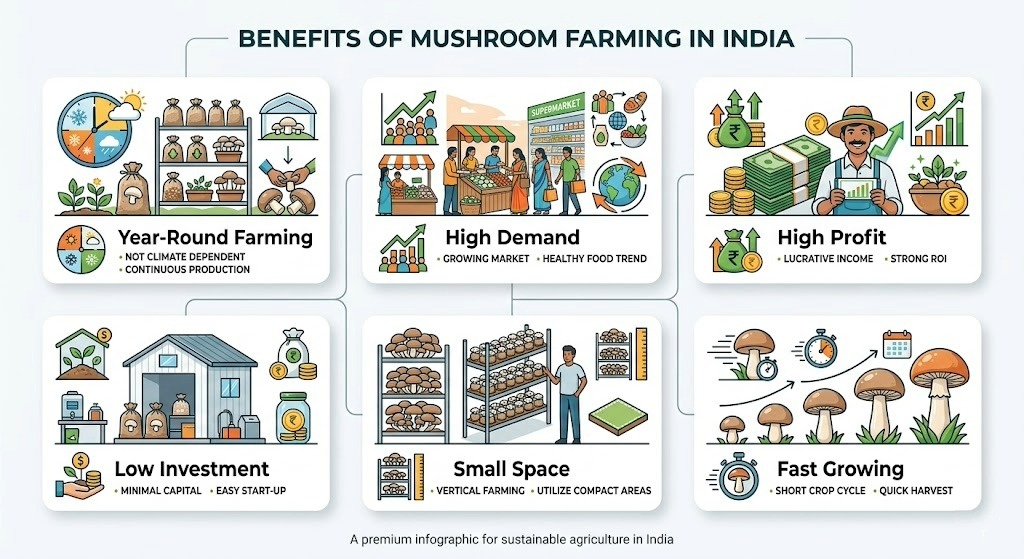
Mushroom Farming Advantages
- Year-Round Farming
- Fast Growing Crop
- High Demand
- High Profits
- As little land as you need
- Low Investment Cost
- Easily Done in Rural and Urban Areas
Mushrooms have a higher market sale price per unit area than any of the traditional crops.
Market Demand for Mushrooms in India
Reasons for the booming demand for mushrooms include:
Growing Health Awareness
Increased health consciousness means consumers are more likely to choose food that is healthy and has a high protein content.
Restaurant Industry Growth
Growth in the restaurant industry means that hotels and restaurants and the catering trade use mushrooms extensively.
Rising Vegetarian Population
The growing population of vegetarians means that mushrooms are an adequate replacement for meat products.
Food Processing Industry
The food processing industry uses mushrooms for:
- Soups
- Sauces
- Ready-to-cook meals
- Snacks
- Health supplements
These trends in demand for mushrooms provide huge opportunities for mushroom farming.
Types of Mushrooms Cultivated in India
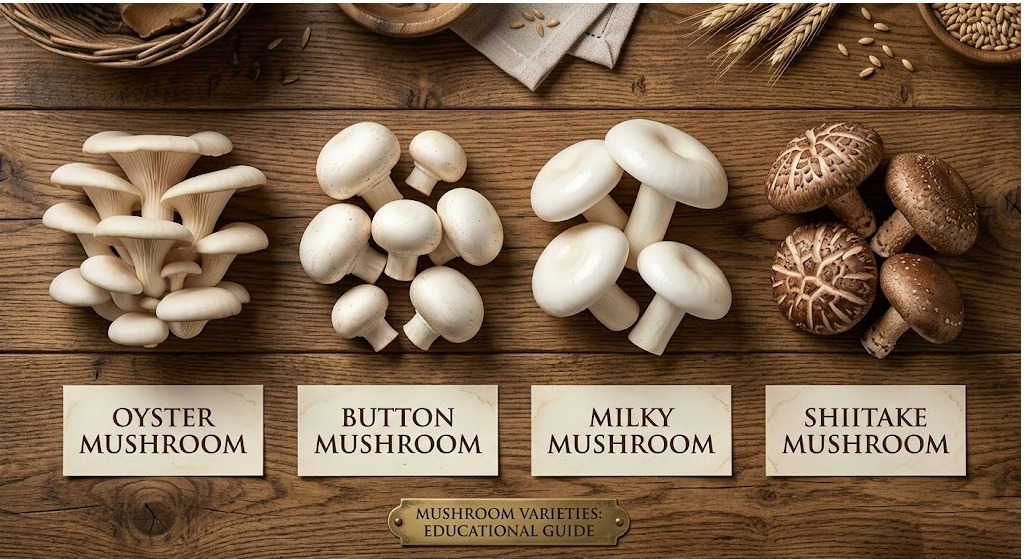
Mushrooms commercially cultivated in India include:
1. Oyster Mushroom
Beginners to mushroom farming can cultivate oyster mushrooms because they require low investment and have a simple growing method, and they grow fast. Many small farmers start oyster mushroom farming at home.
2. Button Mushroom
Button mushrooms have one of the highest consumption rates in the country.
Benefits:
High market demand
High price
Good supply chains
Constraints:
- High investment
- Controlled farming required
3. Milky Mushroom
Milky mushrooms are a good choice in a hot climate.
Benefits:
- Good shelf life
- Good appearance
- Good for the Indian climate
4. Shiitake Mushroom
Shiitake mushrooms are a high value and a high price mushroom and have a limited market.
Mushroom Farming Requirements
There are some basic requirements that need to be fulfilled before commencing mushroom farming.
Space Requirement
A small mushroom farm can be started in a spare room, shed, warehouse, or structures in the backyard. Commercial mushroom farms require large structures for production.
Environmental Conditions
Cultivating different mushroom varieties requires special conditions.
Generally, the ideal conditions are as follows:
Temperature
20°C to 30°C
Humidity
80 – 90%
Ventilation
Required
Cleanliness
Reduced contamination is achieved through strict hygiene.
Mushroom Cultivation Process
Even though some cultivation methods vary among mushroom types, they typically include these steps.
Step 1: Selection of Mushroom Variety
Market demand and climate suitability should be considered for the variety selected.
Oyster mushrooms are the typical variety chosen, particularly by beginners.
Step 2: Preparation of Growing Medium
Common agricultural residues include the following:
- Paddy straw
- Wheat straw
- Residues of straw
Harmful microorganisms are eliminated through treatment of the medium.
Step 3: Spawning
The growing medium is prepared by mixing it with mushroom spawn.
Step 4: Incubation
Controlled conditions are applied to storage of bags or containers.
Colonization of the substrate is performed by the mycelia.
Step 5: Fruiting
Mushroom production is stimulated by adjusting humidity and ventilation.
Development of mushrooms occurs within a few weeks.
Step 6: Harvesting
Mushroom quality and shelf life are extended through careful harvesting.
Mushroom Farming Cost in India
Estimates depend on operational scale.
Small-Scale Mushroom Farm
Estimated Cost
| Item | Approximate Cost |
|---|---|
| Spawn | ₹ 3,000 |
| Straw | ₹ 2,000 |
| Bags and Materials | ₹ 1,000 |
| Room Preparation | ₹ 5,000 |
| Miscellaneous | ₹ 2,000 |
Total Investment
₹ 10,000 to 20,000
Beginners and home-based entrepreneurs are the typical users.
Medium-Scale Mushroom Farm
Estimated Cost
| Item | Approximate Cost |
|---|---|
| Infrastructure | ₹ 50,000 |
| Equipment | ₹ 30,000 |
| Raw Materials | ₹ 20,000 |
| Labor | ₹ 20,000 |
Total Investment
₹ 1,00,000 to 2,00,000
Commercial production is the typical use case.
Commercial Mushroom Farm
The range for Commercial Mushroom Farms is:
₹ 5 lakhs – ₹25 lakhs and above
It depends on the level of automation, scale, and variety of mushrooms.
Mushroom Farming Benefits Per Month
The profits depend on:
Volume of Production
Price of Sale
Expenses for Operation
Accessibility to the Market
Monthly Profit Example
Production:
500 Kgs of mushrooms
Average Selling Price:
₹ 180 per Kg
Total Monthly Revenue:
₹ 90,000
Estimated Monthly Operational Expenses:
₹ 40,000
Estimated Monthly Profits:
₹ 50,000
Higher profit margins for Monthly Profits is common in mushroom farms.
Mushroom Farming Business Plans for Beginners
Planning is fundamental for a successful mushroom farming business.
Step 1: Market Research
Understand:
- The Demand of the Market
- Your Competitors
- Your Potential Customers
Step 2: Small-Scale Production
Practice small-scale production that you can manage and learn the process of production before you scale.
Step 3: Customer Creation
This can be focused on:
- Local Vegetable Markets
- Restaurants
- Hotels
- Grocery Stores
Step 4: Growth
Start scaling production once demand is established with differentiated mushroom varieties and consider new products that don’t exist in the market.
Some Common Issues Affecting Mushroom Farms
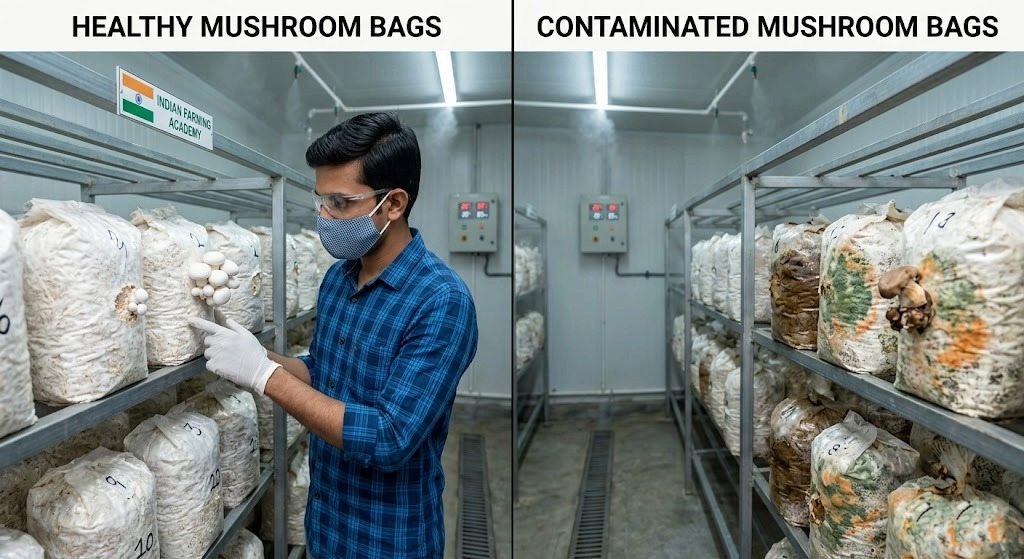
All business issues.
Contamination
Hygiene can play an important part in capping your output.
Make sure you:
- Keep everything clean
- Use Quality Spawn
- Maintain Proper Sterilization Techniques
Market Fluctuations
Supply and Demand determine the price and can work against your product.
Have sales diversification and not a single sales focus to help with the impact.
Climate Control
Output is directly impacted by temperature and humidity.
You need to check the environments in the units for output consistently.
Ways to Improve Profits from Mushroom Farms
Use Quality Spawn
This gives you better output with greater consistency.
Contamination Control
The better the hygiene, the better the output.
Self-Marketing
You must sell to the end customers for greater margins.
Value Addition
Consider selling:
- Dried mushrooms
- Mushroom powder
- Mushroom soup mixes
- Mushroom pickles
These products are usually sold at a premium.
Marketing Strategies for Mushroom Farmers

An effective marketing strategy makes a significant contribution to the long-term sustainability of a business.
Local Vegetable Markets
Fresh mushrooms have a good market in urban and semi-urban centers.
Restaurants and Hotels
These businesses need a regular supply.
Supermarkets
Retail chains mean higher sales.
Social Media Marketing
Facebook and Instagram can be used to market products to the local community.
Direct to Consumer Sales
Home delivery systems can create a loyal customer base.
Future of Mushroom Farming in India
There are a number of sectors that can boost the mushroom farming business:
Increasing Health Awareness
People are looking to consume healthier food.
Growing Urban Population
There is an ever-increasing demand for convenience food.
Government Support
Mushroom farming is encouraged through agricultural entrepreneurship programs.
Export Potential
Specialty mushrooms have a niche in the international market.
Considering the above factors, the future looks bright for mushroom farming.
Is Mushroom Farming a Good Business in India?
Mushroom farming has the following advantages:
- Low Investment
- Quick Return on Investment
- High Demand
- No Limit to Scale
- Eco-friendly
- Easy to Grow
Each one of you- farmers, students, homemakers, and entrepreneurs- can find mushroom farming a good source of supplemental income if you manage the farm well.
Conclusion
Mushroom farming may be the best example of a low-investment, high-demand, quick Return on Investment business in the agricultural sector of India. The health of consumers is driving demand, and the short farming cycle makes it an attractive farming business, whether small or large-scale commercial farming.
Proper planning, quality production, and good marketing and learning create a recipe for success. Farmers can establish a profitable and sustainable business with these practices and help from gradual expansion.
Mushroom farming has low investment costs and shows significant growth potential. This makes it a good, low-risk agribusiness.
Frequently Asked Questions
How much capital is needed for mushroom farming?
A mushroom farm can be started with a capital of approximately ₹10,000 to ₹20,000.
Is mushroom farming a good business in India?
Mushroom farming can be a good business and profitable with good cultivation and marketing.
Which mushrooms are easy to grow for beginners?
Oyster mushrooms are the easiest and cheapest to cultivate.
How much can a mushroom farm make?
This varies based on production scale and costs. Many small and medium farms make good profits monthly.
Is it possible to farm mushrooms at home?
Yes, oyster mushrooms can be cultivated in small rooms and sheds.